by Nathaniel Gotcher
Society exists for the common good, the shared happiness of humans. The modern city, however, is characterized not by happiness but violence and there is a sharp political divide between urban and rural citizens. The way we have organized our residential and commercial developments reinforces this reality: the city is in one place, the countryside in another, divided by “suburbs” developed with huge swaths of unproductive land. If the modern polis is fractured, is it any wonder our politics are just as fractured? If we are to make the common good central to our politics, we could do worse than look at how our cities are organized.
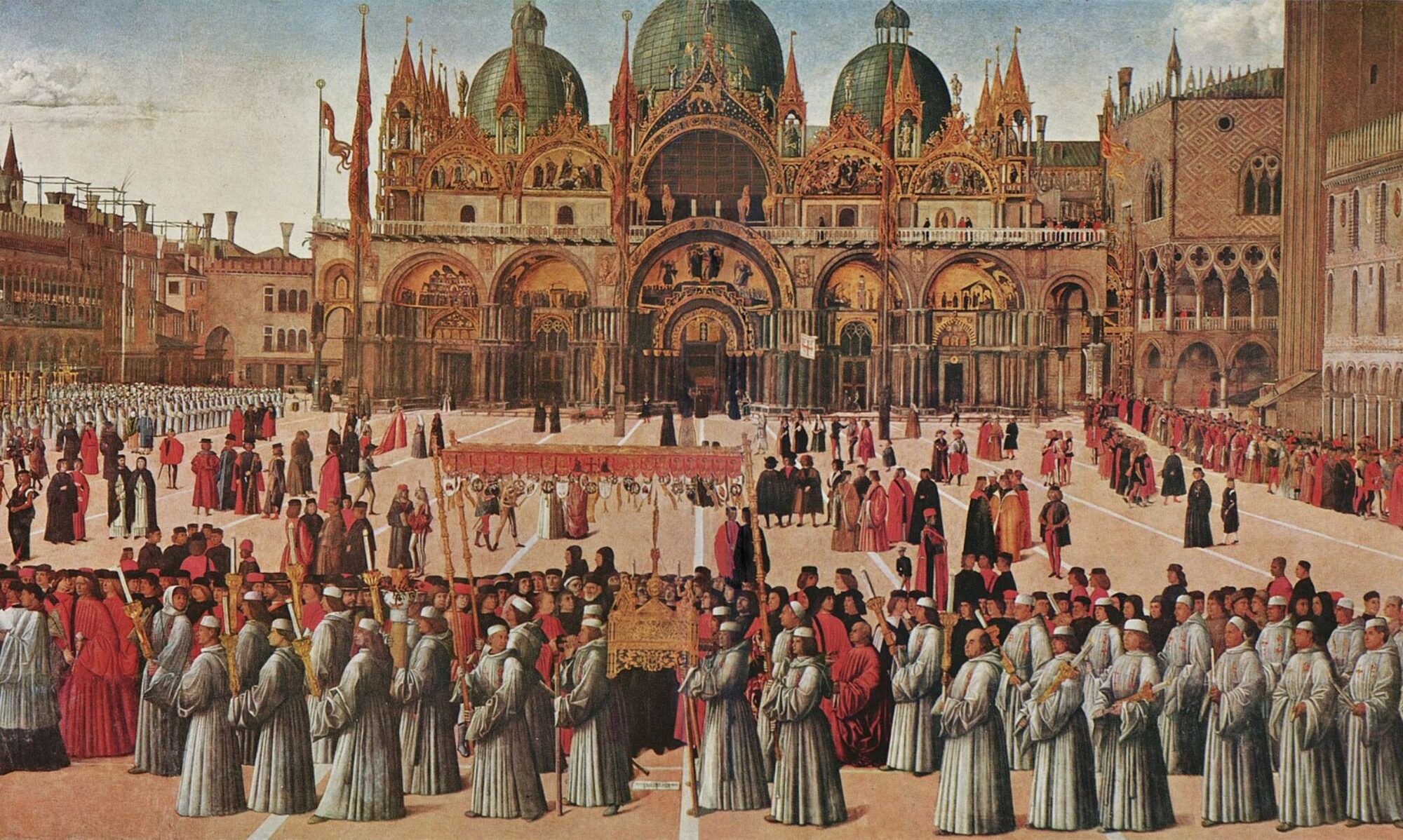
Cities have traditionally been organized to facilitate the everyday activities of the community. These activities include worship, exchange of goods, study, and recreation. Markets, where the exchange of goods took place, were often centrally located so that they were available to all. Temples (and later the church) were given prominent locations near the center of the city, making the worship of the gods (and later the one God) central to the lives of the citizens, both symbolically and practically. Those buildings and areas used most often were given greater attention and those buildings which symbolized the community, and its identity were given places of honor. These material features of traditional cities were promoted out of necessity. Without the common sharing of space and resources, the economy would fail and so too would the city. This practical and public good of urban design is linked to the common good of a community, beneficial activity and happiness shared by all.
Cities in our day are so tied into the global economy that it is unlikely that they will fail. Resources can be shared across oceans and continents in a matter of days; funds can be allotted instantly through the internet. While this can and does lead to a very many good things (not least among them is the ease with which we can aid those starving or experiencing violence around the world), it has also all but abolished the necessity for citizens to share with each other the practical goods which promote a truly common good. Families (and even individuals) can survive and even thrive separately from those who live near them, as long as they have the funds to support their way of life. With enough personal wealth or property, we do not need the others in our community, at least not materially, as humans have in the past.
If traditional urbanism promoted the common good in addressing the practical necessities of city life, how should cities approach urbanism where those necessities no longer pertain? Cities, generally speaking, are made up of buildings and roads. Urban design focuses on where buildings and other destinations should be built and how best to get to them. Before proposing principles of urbanism that support the common good, we must know which buildings and spaces encourage the common life. The citizens of the modern world need, as humans always have, security and sustenance. To support this need, a community must have certain building types and appropriate infrastructure. What this means will vary greatly between countries and even between neighboring cities, but the types remain the same.
The first and most fundamental type is housing. Houses provide immediate security to the citizens and give families a place in which to organize their personal lives so as to better participate in the common life of the city. Secondly, farm buildings and other buildings where food is grown, prepared and stored for the sustenance of the citizens. All further urban development is built on this foundation. The production of tools for the everyday needs of the city’s households and other manufactured goods requires workshops. Storage buildings are necessary to keep these goods safe, and markets provide a place where these goods can be distributed and exchanged. These building types make up the basic layer of urban development; however, these building types only address the ordinary material needs of the citizens. The common good ultimately concerns the whole person, spiritual as well as material. The material needs provided by these buildings are essential to maintain a city, but without buildings which address the spiritual goods of the community, the city remains incomplete.
The human spirit must first of all be formed. To this end, a city should have schools where children are educated “in the arts and sciences for the advantage and prosperity of civil society.” (Divini Illius Magistri 77). This education allows the citizens to determine just and prudent action in the face of political uncertainty. A city thus needs a place set aside for careful political deliberation. Furthermore, a city needs places for artistic and scientific endeavors so that the human spirit might be elevated by the contemplation of truth and beauty. Finally, the city requires houses of worship so that the final end of the human person, union with God, is given a place of honor in society.
The arrangement of these buildings is the second half of urban design. There are three aspects of urban arrangement: number, proximity, and hierarchy. There must be a sufficient number of each building type so that every citizen is able to participate in the life of the city. Some needs, such as the storage and distribution of goods, are related and so their respective buildings should be built near each other. Also, the buildings which provide the daily needs of the citizens ought to be close to their houses so that travel does not dominate their lives. Those buildings which concern the human spirit should be given special attention in the design of the city. Streets, bridges, lighting and other infrastructure aid in the effective arrangement of a city.
All urban design decisions should weigh these considerations carefully. The arrangement of the parts of the city is an essential aid in the pursuit of the common good. The buildings and infrastructure of a city provide the necessary support for the security and sustenance of the citizens. Furthermore, they designate places for the pursuits of the human spirit. Scientific progress has brought us many things: new and more efficient ways to grow food, faster transportation, and global trade among others. New urban forms are possible, and the organization of communities is more varied than ever. Despite this, human nature is the same, and cities should be designed to fulfill the common good, both material and spiritual.